Artemis II Mission: Full Details of NASA’s Historic Crewed Journey Around the Moon 🚀🌕
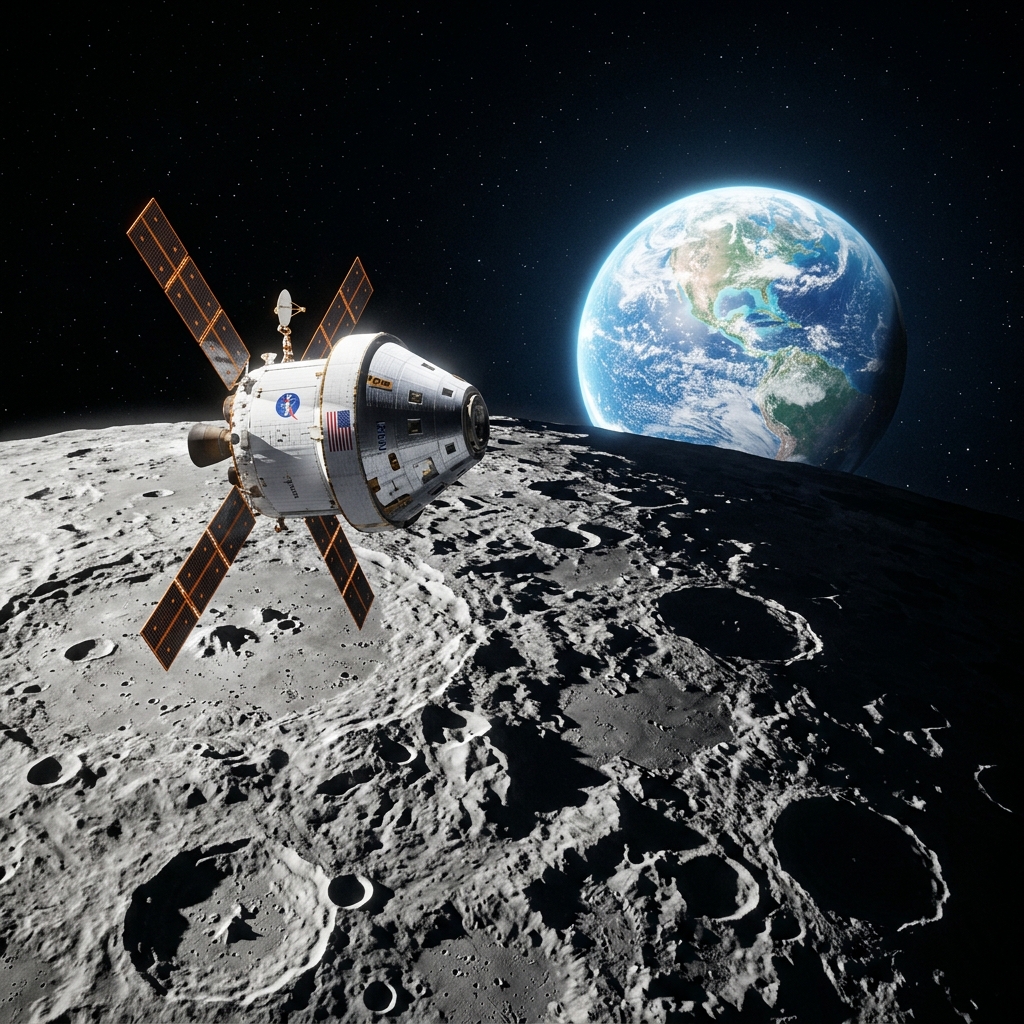
This historic flight represents a critical step toward humanity’s return to the Moon and future missions to Mars.
Mission Overview
Artemis II was the second mission in NASA’s Artemis program and the first to include a human crew. Unlike its predecessor, Artemis I, which was uncrewed, Artemis II tested the Orion spacecraft with astronauts onboard.
- Launch Date: April 2026
- Mission Duration: Approximately 10 days
- Mission Type: Crewed lunar flyby
- Landing: Pacific Ocean, near San Diego, California
The mission did not land on the Moon but instead performed a lunar flyby, traveling thousands of kilometers beyond the Moon before returning to Earth.
The Crew
The Artemis II crew consisted of four highly trained astronauts, marking a significant moment in diversity and international collaboration in space exploration:
- Reid Wiseman – Mission Commander
- Victor Glover – Pilot
- Christina Koch – Mission Specialist
- Jeremy Hansen – Mission Specialist (Canadian Space Agency)
Spacecraft and Technology
Artemis II used NASA’s advanced Orion spacecraft, designed specifically for deep space missions. Key features include:
- Capable of carrying astronauts beyond low Earth orbit
- Advanced life-support systems
- Heat shield designed to withstand extreme re-entry temperatures
- High-speed re-entry capability
The spacecraft was launched using NASA’s powerful Space Launch System (SLS), one of the most advanced rockets ever built.
The Journey to the Moon
After launch, Artemis II performed a series of engine burns to set its course toward the Moon. The mission stages included the Trans-Lunar Injection (TLI), Lunar Flyby, and the critical Return Trajectory to Earth.
Historic Significance
Artemis II is widely considered one of the most important space missions of the 21st century. It demonstrated readiness for future Moon landings and strengthened international collaboration between NASA and its global partners.
Splashdown and Recovery
At the end of the mission, the Orion spacecraft re-entered Earth’s atmosphere at extremely high speeds before safely descending into the Pacific Ocean near San Diego, California. The U.S. Navy recovery teams successfully extracted the crew for medical checks and debriefing.
Conclusion
Artemis II represents a bold leap forward in human space exploration. By successfully sending astronauts around the Moon and returning them safely to Earth, NASA has demonstrated that humanity is ready to once again explore deep space.
As we look toward Artemis III and beyond, one thing is certain: the journey back to the Moon has truly begun.
Tags: Artemis II mission, NASA, Moon mission 2026, Orion spacecraft, SLS rocket
Read More from Lumina Blog